Expat Explorers - travels with my family ideas...insight...inspiration
Get in contact
  • About
    • Meet the family
    • Photo gallery
  • Blog
  • Travel ideas & advice
    • Expat suitcase >
      • Moving to Dubai
      • Moving to Singapore
    • Jigsaw pieces: travel advice
    • Australasia
    • Middle East
    • South East Asia
    • USA
    • Where in the world are we?
  • In the news
    • Freelance work
    • Who said that? Travel quotes
    • Signs that make you think
  • The book
  • Contact us
    • Explorers' Club

The new Myanmar: Part 2

7/12/2016

0 Comments


Inle Lake and Bagan

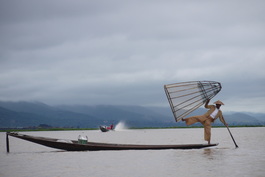
There must be an easier way to fish: Inle, Myanmar
Inle Lake
Inle Lake was one of the highlights of the trip for us. Every morning we were picked up from our riverside guesthouse in a narrow wooden fishing boat, with the loudest two-stroke engine, which sounded like an industrial lawnmower. It wasn’t just the noise pollution that was alarming. Unfortunately, the black, arid exhaust will eventually spoil the region, if an affordable alternatives can not be found.


Read More
0 Comments

The new Myanmar: Part 1

7/12/2016

0 Comments


Yangon and Kalaw

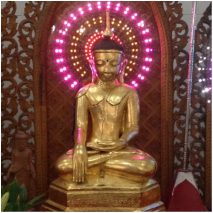
Worship the bling
Yangon (Rangoon)
No city epitomises the division between democracy and dictatorship more than Yangon.
 
After five decades of military rule, the National League for Democracy won a landslide victory in November 2015, the first elections for 25 years. It’s leader Aung San Suu Kyi has been a figurehead representing hope for those wishing to join the democratic world, her pedestal only raised higher by house arrest and enforced separation from her half British sons.


Read More
0 Comments

The new Myanmar: why visit now?

7/12/2016

0 Comments

 
Myanmar or Burma?
Burma is on a lot of travellers’ bucket lists. But why? Is it the draw of exploring new frontiers, on the cusp of a new democratic future? Is the beautiful countryside and lakes? Or is it the temples and mystical stupas punctuating the skyline?
 
Keeping true to our motto, “have kids, will travel”, we packed a few backpacks to find out.
 
Here’s a peak at our top four places to see: Yangon, Kalaw, Inle and Bagan.


Read More
0 Comments

The changing face of the pumpkin

1/11/2016

0 Comments

 
Picture
A strange change has taken place across the world, hiding under the leathery wing of a vampire bat. Hallowe’en has carved its way onto the calendar as a regular event to be celebrated. I find this as strange as seeing a pint-sized Superman walking down the road.
 
This needs some explaining. When I was a child Hallowe’en was about cowering in the living room with the light off to avoid the eggs and flour being pelted by boisterous teenagers. And this didn't just happen on the 31st October, but for a period of up to two weeks.
 
I was taught that trick or treating was akin to begging, afterall it is a little strange to knock on the door of a complete stranger and ask for sweets.
 
Then I moved to America. These guys know how to party. Hallowe’en is a family affair with hoards of parents and children on the streets, dressed up in every costume imaginable. It didn’t have to be anything ghoulish or ghastly. We even saw a horse dress as Clifford the big red dog. We joined in, and apart from the ridiculous amount of confectionary that would send a toddler hyperactive for a decade, it was a fun event that allowed us to feel part of the fabric of our new home.
 
So why was it different? For a start the local council stipulated when trick or treating could take place; not just the day, but the hours too. It was also known that if you didn’t want to get involved you simply left your porch light off, avoiding the element of “trick” altogether. Really this is treat or treating.
 
More than anything it’s the irony that gets me, wrapped up in the distance past.
 
The history
The origins of Hallowe’en are intertwined: first there was the Celtic pagan festival to mark harvest and the end of summer, and then came the Christian celebration on the Eve of All Hallows. Yes, All Hallows’ Evening becomes contracted to Hallowe’en. From as far back as the 11th century, food was given in exchange for a poem or song. It wasn’t until the 19th century that tricks were involved.
 
Strictly speaking the festival doesn’t belong across the pond at all. It was introduced by immigrants, although the phrase “trick-or-treat” was first used in the US, in 1927.
 
Confusing, isn’t it? Even the church is confused. I’ve seen a pumpkin with a Christian cross carved out of it. I’m not sure how I feel about the church endorsing a festival that is so intrinsically linked to Pagans, or begging by another name.
 
The changing face
We’ve now returned to the UK after nearly seven years, and this year’s Hallowe’en has been a much more orderly affair. We live in a fairly rural area so trick-or-treating isn’t really done; the lanes are too dark, the houses are too far apart and I think there is a greater respect for elderly neighbours.
 
However, other neighbourhoods have been getting organised. Hallowe’en happens on the 31st October and that’s where is should stay. The role of the porch light seems to be understood. Children are accompanied by adults, rather than the marauding hoards of bored teenagers. It’s about children, and of course the children are excited about sweets. I hope all neighbourhoods are experiencing this changing face. It could be a great way to invigorate our communities.
 
I can’t change that Hallowe’en occurs, but I can get into the spirit of it, and it looks like everyone else is too.
 
What’s your Hallowe’en experience? Like it or loathe it?
 

0 Comments

Will Brexit break Britain? Thoughts of an expat

18/7/2016

0 Comments

 
Brexit expat thoughts
Like most people interested in the future prospects of their homeland, I’ve listened to the debates, read the arguments and have conviction in the way I voted.
 
And the future is still as clear as mud.
 
First things first. Let’s put the vote on the table. I’m a remain supporter for three reasons.

  1. The EU is an undemocratic, unwieldy and bureaucratic organisation that needs to change, but essentially I believe it’s easier to influence change from within. If the winds of change are already blowing in other countries, surely together we can blow up a storm to make the necessary improvements.
  2. For the sake of the economy, I also believe in the free movement of useful labour; I’m an expat who has lived, and contributed, to the countries I’ve lived in. 
  3. I also fear that sudden dramatic changes spook financial markets so they jump back into the shadows. It may take years to coax them back out. The FTSE100 may recover, but the strength of the Pound is shaky and confidence has been shaken.
 
That said, I do believe a truly British approach is required. I’m not talking about a whinge over a pint. I’m talking about a stiff upper lip. If we can’t talk positively about an inevitable change, inevitably it will end badly.
 
We now have a new female prime minister and the chance to make a fresh start. How will Theresa May get the best out of the Brexit bust up?
 
Let’s start with the popular issues surrounding Brexit. It’s not all bad, but anything can be presented in a bad light. The main divisive issue has come down to immigration and the protection of British sovereignty.
 
The Brits don’t run the Union flag up the pole as often as other nations, but we are a proud nation. Unfortunately, we only seem to be united over sport (Hamilton at the British F1 Grand Prix, Murray at Wimbledon, Froome on the Tour to name a few examples). So if we’re not always that bothered, why do we need to protect our sovereignty and what is it anyway? Let’s start with what it is not:
 
Sovereignty protection is not about protecting British jobs for the British. After all, in some sectors of society, Brits have the energy to complain about “foreigners coming over ‘ere stealing our jobs”, but don’t have the energy to actually do a job.
 
Sovereignty is not even about pulling up the drawbridge to stop immigrants flooding in. Refugees and legal immigrants need help. I would want to protect my family from the dangers of war. I would also want to return to my homeland when it was safe, and we tend to make the assumption that others do not.
 
Sovereignty is not a teenager that needs protecting from an overbearing European parent that constantly tells it what to do, preventing it from becoming an individual.
 
To me, sovereignty is about community. We can’t be cookie cutter nations, otherwise what is the point of sovereignty in the first place? My children have lived in four countries and they are only seven and nine years old. They know that the world is made up of all colours, all religions, all cultures. And that’s all ok. As my older daughter said: “We all have two arms, two legs and one head, so aren’t we the same?” Essentially, yes. We are all the same, but different, and that’s to be encouraged and welcomed.
 
Sovereignty is about celebrating our differences and changing elements that help us work with others, while not denting our own development of community. Here’s an example: I don’t know why we still measure road distances in miles in the UK, when we have been part of a metric system my entire four decades on this planet. It makes no sense, and only complicates issues when I drive in other countries. However, when I go to the pub, I may like to have a pint. It’s a quintessentially British measure, and changes nothing else. The world does not shift on its accent. Nothing else is measured in a pint. I don’t have to convert it. It’s just a pint.
 
So what does this all mean? To me, it means that developing your own personality and individualism is something your parents taught you when you were growing up. As long as it doesn’t impact other people it’s fine. Individualism, or in the case of the UK, our cultural community development, isn’t racist. At least it shouldn’t be. It should be a excuse to say: “Hey, we’re a bit difference. Come and join us for a cup of tea and some scones.” It doesn’t say: “Stay out, we don’t want you to join our gang,” or “Come and take the mickey out of the way we are different by being the last to leave the party.”
 
So Brexit voters, you’ve got what you voted for, and in a democratic Britain that’s fine. But please don’t screw it up. Create something individual and different, so others want to join our gang and hang out with us for a while.
 
Leave us a comment below. We'd love to hear your view.

0 Comments

Snorkelling, cocktails & a tropical island paradise

6/6/2016

1 Comment


Palau Sibu, Malaysia's east coast

1 Comment

G’Day Mate! Crocs, camping and a big red rock. Part 4

15/4/2016

0 Comments


 Kakadu, Katherine & Litchfield

Australia's Top End travel notes
Where are we? 
A two week tour of Australia’s Northern Territories and the Red Centre
For full itinerary please click here.

Part 4: Kakadu, Katherine & Litchfield
On Sunday night I watched Crocodile Dundee, the iconic film starring Paul Hogan and Linda Kozlowski, a story of a croc wrestling bushman in Kakadu called Mick. Do you know how old that film is? This will make you feel old. This year it will celebrate its 30th anniversary.
 
Kakadu
My first piece of advice for this part of the trip is: Don’t go in the wet season. Most of the park is shut. We visited in early April, which according to Kakadu’s Park Pass pricing system is considered to be the start of the Dry Season. However, after handing over AUS$100 we found that most of the park was shut and still waterlogged, making the fee a very expensive toll to drive on the only road that runs through the park.
 
When they are open, there are some beautiful walks however, and if you get the chance to go, take it. It doesn’t even matter if you don’t like walking. Most of the routes are very short, just a kilometre or so. Ubirr and the Sandstone walks are pretty, as is the climb to the Mirrai lookout.
 
There’s a short walk at Nourlangie, which will give you a flavour of the views, as well as some interesting rock paintings, or if you go early enough you can walk the full 12km. The routes are generally well signposted, although some of the maps and noticeboards are a little worn.
 
Before heading out get advice from the Bowali Visitors’ Centre on what’s open, what to see and what provisions you’ll need. Our girls loved the exhibition at the centre so it’s worth visit, and there’s free wifi!
 
One of the highlights, although a little pricey, was the Yellow River cruise. With an interesting commentary and a guide who had better eyes than a hawk, there was plenty to see. Who doesn’t want to search for crocodiles from the safety of a boat? Just keep all body parts inside the vessel. These snappers really do bite.
 
To cool off from the heat and humidity visit the Yurmikmik Motor Car Falls, which are free of crocodiles. (Don’t take our word for it. Crocs have a tendency to move around with the changing water levels so check before you go.)  The water is clear, clean and cool. Although a linear walk of 7-9km, you can break it up with a short detour to climb to a look out.
 
Katherine
You don’t visit for the upbeat, cool vibe of the town, because it doesn't have one. It’s a pleasant enough place to stop, but our real focus was a visit to the Katherine Gorge. Owned by the local Jawoyn people, the Nitmiluk Gorge, as it is also known, offers an insight into the cultural significance of these rocks. Our guide was brilliant at giving us information on the indigineous way of life, as well as the geology, flora and fauna.
 
We also spent time at the Katherine hot springs. The water is beautifully clean, but unfortunately the river bank has been concreted and reinforced, and the changing rooms are now derelict.
 
Litchfield National Park
Batchelor is the gateway to the park, a interesting little hamlet built on what was a demonstration farm established in 1912 by EL Batchelor. The discovery of uranium in 1949 led to an economic boom, although the mines were shut in the early 1970s.
 
You can spend days exploring the falls and walks of the park, but for a short refresher on the way back to Darwin we dipped into Florence Falls, a double waterfall with a natural splash pool for swimming.
 
If you’ve been to the Red Centre, this circular route at the Top End of Australia is a great trip, especially with children. Whether you’re looking for restaurants and bars, swimming, walking, wildlife, culture or history, there is something for everyone.
 
Trip details
Kakadu:
Where we stayed:
Kakadu - Cooinda Lodge. Tired and could do with sprucing up, but good location, clean linen and great dinner (not so impressed with the breakfast) and swimming pool.
 
What we ate:
Fish and chips, kangaroo burgers and lamb shank from Cooinda. Sandwiches, pastries and ice cream from Jabiru bakery.
 
Katherine:
Where we stayed:
Shady Lane Tourist Park, one of the best I've been to. A clean, neat and pleasant family-run campsite, which also has great little cabins on stilts. The river flooded in 1998, rising to a peak of 20.4m, hence the stilts.

Where we ate:
Not a great selection, but the Katherine RSL Club is the hub of the community.

Part 1: Darwin
Part 2: Alice Springs
Part 3: The Red Centre
More photos
​

0 Comments

G’Day Mate! Crocs, camping and a big red rock. Part 3

15/4/2016

1 Comment


Uluru & the Red Centre

Australia's Red Centre travel notes
Where are we? 
A two week tour of Australia’s Northern Territories and the Red Centre
For full itinerary please click here.

Part 3: Uluru and King’s Canyon
Today is the day we met Joe, from Outback Tour Services, our tour guide for five days. We usually go it alone when we travel, but the Red Centre is one place you may wish to enroll a little help. I could list a hundred reasons why, but I’ll start with five:

  • You don’t want to get lost – it’s hot, remote, and full of things trying to kill you,
  • There’s a lot of driving,
  • You can take a backseat and enjoy the scenery,
  • A knowledgable guide will give you an insight into the land, flora and fauna,
  • And you’ll cram in more than if you do it yourself.
 
You might think that there isn’t much to see in this great expanse of dust. After all, some of the cattle stations are the size of European countries. You could be a seagull tourist, just flying in and flying out again. But if you really want to get to see why people visit and stay, book yourself on a tour.
 
(If you do go it alone, you’ll need a 4WD, as not all the roads are sealed. You’ll need to know how much petrol and water you’ll use if you’re planning to travel off road. You’ll need a sat phone, as your iPhone certainly won’t work.)
 
Jolly guide Joe was full of relevant information that enabled us to understand not only how the rock in front of us was formed, but what it meant to the local tribes. It’s not just a rock. It’s a snake or a paw print, wrapped in stories that have been passed on verbally and through rock art over centuries.
 
If you’re expecting luxury, you’ll be disappointed if you go with thoughts of crisp white linen and chandeliers. This is not luxury in terms of glamping. The outback is a hard and harsh environment. Aussies are rugged, fit and keen. Luxury camping means that you’ll be offered a bed in a tent with a solid floor instead of a sleeping bag on the ground (although the latter can be arranged, and is worth doing). You’ll be able to sit at a table to eat dinner from plates, although there’ll also be opportunities to roast marshmallows over an open fire. And you can’t beat the glass of bubbly and nibbles on offer as you watch the fantastic sunset over Uluru.
 
Sights to see
Uluru
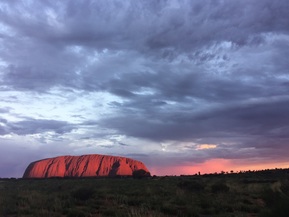
Let’s face it, Uluru is just a rock. That’s it. It’s a huge rock in the middle of nowhere. Except it’s not. It has a magical spirit that draws in travellers from far afield with a force field that can’t be explained. And the more you learn, the more mystical it becomes. For example, you’re only looking at the very tip of a gigantic rock that sits on its end, reaching a depth of 2.5km below ground. It’s about 3.6km long, 1.9 km wide, and has a circumference of 9.4km. As I say, it’s a big rock. 
 
It’s swaddled in Aboriginal stories and tales that go back centuries, and you’re asked to respect the rock in the same way. You’re asked not to climb it, although you can if you want to disregard the locals’ wishes. Try the 10km base walk instead, which is dotted with paintings and sacred Aboriginal sites. (You’ll be asked not to take photographs of these areas.)
 
Essentially, the rock will question your integrity. It will question your views on how Aborigines and Europeans should live together.
 
Make sure you see the rock from the sunset viewing spot. It’s amazing. The photographs speak louder than words, so click here to see our "no filter' pictures.
 
Also set in the Uluru-Kata Tjuta National Park are the 36 domes of the Olgas, or the Kata Tjuta to give them their local name. The area has some lovely walks, with the Valley of the Winds being my favourite.
 
Kings Canyon National Park and gorges
We continued on to Kings Canyon National Park, which for some people is the best part of the trip. Beautiful walks, stunning viewing, drops literally to die for so keep hold of your children. As with most walks in this region you need to start early, finishing before 11am, and take plenty of water.
 
The sealed road disappeared into dust as we continued around the Mereenie loop, which took us to Glen Helen and several beautiful gorges, with ochre-red views.
 
I don’t feel I’ve ticked Uluru off my list. I’ve done more than that. With Joe’s help I feel I’ve been able to get under the skin and gain a little understanding of what I’m looking at. I've changed my mind. It’s not just a rock.
 
Who we travelled with:
Outback Tour Services. They offer a range of tours to suit all budgets. We experienced the five day 4x4 Red Centre Adventure as part of a luxury private chartered service, but group tours are available too. They even offer disability camping tours making the Outback accessibly to everyone.

Where we stayed:
Two nights camping near Uluru, one night camping near Kings Canyon, one night camping at Glen Helen.
​
What we ate:
Traditional damper bread cooked on the fire, barbeques, curries and Bolognese. And of course marshmallows.

Watch our video below for a peak of what we got up to.

Part 1: Darwin
Part 2: Alice Springs
Part 4: Kakadu, Katherine & Litchfield
More photos
Uluru in the news. To climb or not to climb?

1 Comment

Australia's Northern Territories in pictures

14/4/2016

0 Comments

 
For our itinerary and destination blog, just click.
0 Comments

​G’Day Mate! Crocs, camping and a big red rock. Part 2

13/4/2016

0 Comments


Alice Springs

Travel with kids: Alive Springs, Australia
Where are we?
A two week tour of Australia’s Northern Territories and the Red Centre
For full itinerary please click here.
 
Part 2: Alice Springs
Alice. What thoughts immediately “spring” into your head? A Nevil Shute novel or a Roy Chubby Brown song? Is this why the name is famous?
 
Alice Springs has a reputation bigger than the small plot it occupies in the middle of a huge, red, dusty desert. Although still 462 km away, most people use Alice as a launch pad for a pilgrimage to Uluru (Ayers Rock), even though the rock has its own airport now.
 
The tourism boom in the outback is still in relative infancy, although there are a few modern chain hotels on the edge of town. Alice may not be the dusty outpost it once was, but if you turn up after 5pm the place will have battened down its hatches. It will look deserted, except for a few bars, where the beer is flowing. Living in Alice is thirsty work.
 
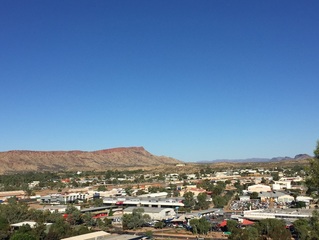
From the air, Alice is nestled on a flat red dusty plain between the spiny backbones of the MacDonnell mountain ranges. Around 25,000 people live miles from anywhere in the red dusty centre of Australia. It is edged by the Todd  River and two hills: Billy Goat Hill and Anzac Hill. You can climb the latter for a great view of the town.
 
During the day, the town comes to life with interesting museums, boutique shops and cafés in Todd Mall.
 
Don’t laugh, but I particularly enjoyed the Old Gaol and the National Pioneer Women’s Hall of Fame. The remoteness of the town makes this exhibition all the more interesting. For a long time Alice was just a lonely telegraph station at the end of the Ghan railway line.
 
Women started to accompany their husbands, who set up cattle stations. They took on roles as midwives, teachers and nurses. With these more feminine skills, Alice became a settlement, rather than a stopping off point. It became a home, rather than somewhere just to water the horses and camels. (Yes, there are camels, from Afghanistan. They were the trains before the railway opened in 1929, and the reason the modern train is called the Ghan.)
 
Its history, however, goes back far deeper as a town in the middle of Aboriginal “countries”. While the mystical and fascinating stories still enthrall explorers, the indigenous population has had a rough ride, seen as animals, and treated as such. With such lack of respect it's little wonder that today’s problems of drink and unemployment may be a reflection of the past.
 
White and black have never fully assimilated each other, absorbed an alternative way of life or become a melting pot of cultures. Whether you look at the situation as Europeans and locals, whites and blacks or infiltrating power and indigenous, the two elements have still not accepted the position of the other, although there are plenty of people on both sides making huge efforts to change things. This isn’t about living in harmony, or even mutual respect. It’s about accepting and living contrasting lives side by side. The Aborigines believe they are tied to the land. Traditionally, there is no time structure in their society. If you’re hungry you eat; if you’re tired, you sleep. That doesn’t overlap well with a modern society governed by clocks, timetables, technology, rules and regulations. There are so many issues that it’s easy to see how this tinderbox could go up in flames.
 
And there are no answers. How do you enforce a structure on a free-flowing society without damaging its culture? How do you create jobs and opportunities for people who don’t seek a European/ Western life? How do you ensure law and order, when the approach of each way of life means accepting the other, and leaving each to their own devices?

Notes on Alice Springs
We stayed at: The Double Tree, Hilton
We ate at: The Overlanders Steakhouse (beef, kangaroo, crocodile), Uncles Tavern (beer and pizza).

Part 1: Darwin
Part 3: Uluru & Kings Canyon
Part 4: Kakadu, Katherine & Litchfield
More photos

0 Comments
<<Previous
Forward>>

    Get the book

    Picture

    Destinations

    All
    Abu Dhabi
    Advice & Top Tips
    Al Ain
    America
    Argentina
    Arizona
    Australia
    Bali
    Batam
    Belfast
    Burma
    California
    Cambodia
    Chicago
    Dubai
    England
    Expat Life
    Hong Kong
    Illinois
    Indonesia
    Japan
    Java
    Jordan
    Kuwait
    Las Vegas
    London
    Malaysia
    Misc
    Myanmar
    Nevada
    New Zealand
    Northern Ireland
    Oman
    Ras Al Khaimah
    Restaurants
    Salt Lake City
    San Diego
    Scotland
    Singapore
    Southeast Asia
    Travel Musings
    Uae
    UK
    Usa
    Utah
    Wales
    Woodstock

    RSS Feed

    Or if you prefer to receive an email update click here to register.

    Archives

    June 2020
    March 2020
    February 2020
    June 2019
    April 2019
    July 2018
    June 2017
    May 2017
    December 2016
    November 2016
    July 2016
    June 2016
    April 2016
    March 2016
    January 2016
    September 2015
    August 2015
    May 2015
    April 2015
    February 2015
    January 2015
    December 2014
    November 2014
    October 2014
    September 2014
    August 2014
    July 2014
    June 2014
    May 2014
    April 2014
    March 2014
    February 2014
    January 2014
    December 2013
    November 2013
    October 2013
    September 2013
    August 2013
    July 2013
    June 2013
    May 2013
    April 2013
    March 2013
    February 2013
    January 2013
    December 2012
    November 2012
    October 2012
    August 2012
    April 2012
    February 2012
    November 2011
    October 2011
    September 2011
    August 2011
    August 2010
    June 2010
    May 2010
    April 2010
    March 2010

Powered by Create your own unique website with customizable templates.